Read time: 5 minutes
There was a season in my life when the decision to leave Malaysia for Australia did not feel exciting. It felt heavy.
I remember standing in the corridors of a KKM hospital, carrying the quiet weight of a system that no longer felt like home. I was working hard, giving a great deal of myself, yet the return, in growth, contribution, and financial reward, felt painfully out of proportion to the life I was pouring into it.
That was the moment the question changed.
The question was no longer, “Is migration scary?”
It became, “When I look back on my life, which choice will I regret less?”
Why it matters?
This matters because you are not simply choosing a country. You are choosing a training environment, a work culture, an income trajectory, a family reality, and a future version of yourself.
The AMC’s 2024 work on international medical graduates, drawing on responses from more than 4,000 doctors, shows that economic factors rank highest in the decision to come to Australia, followed by location and living options, then work-related opportunities. It also shows that the pathway can be slow, demanding, and especially difficult for those on the Standard Pathway.
So this is not a decision to make lightly.
And certainly not noisily.
Because along the way, you will hear strong opinions, fearful opinions, and sometimes bitter opinions. Not all of them deserve influence over your future.
How do you make a decision with real clarity?
A choice like this cannot be made on emotion alone.
It needs a framework.
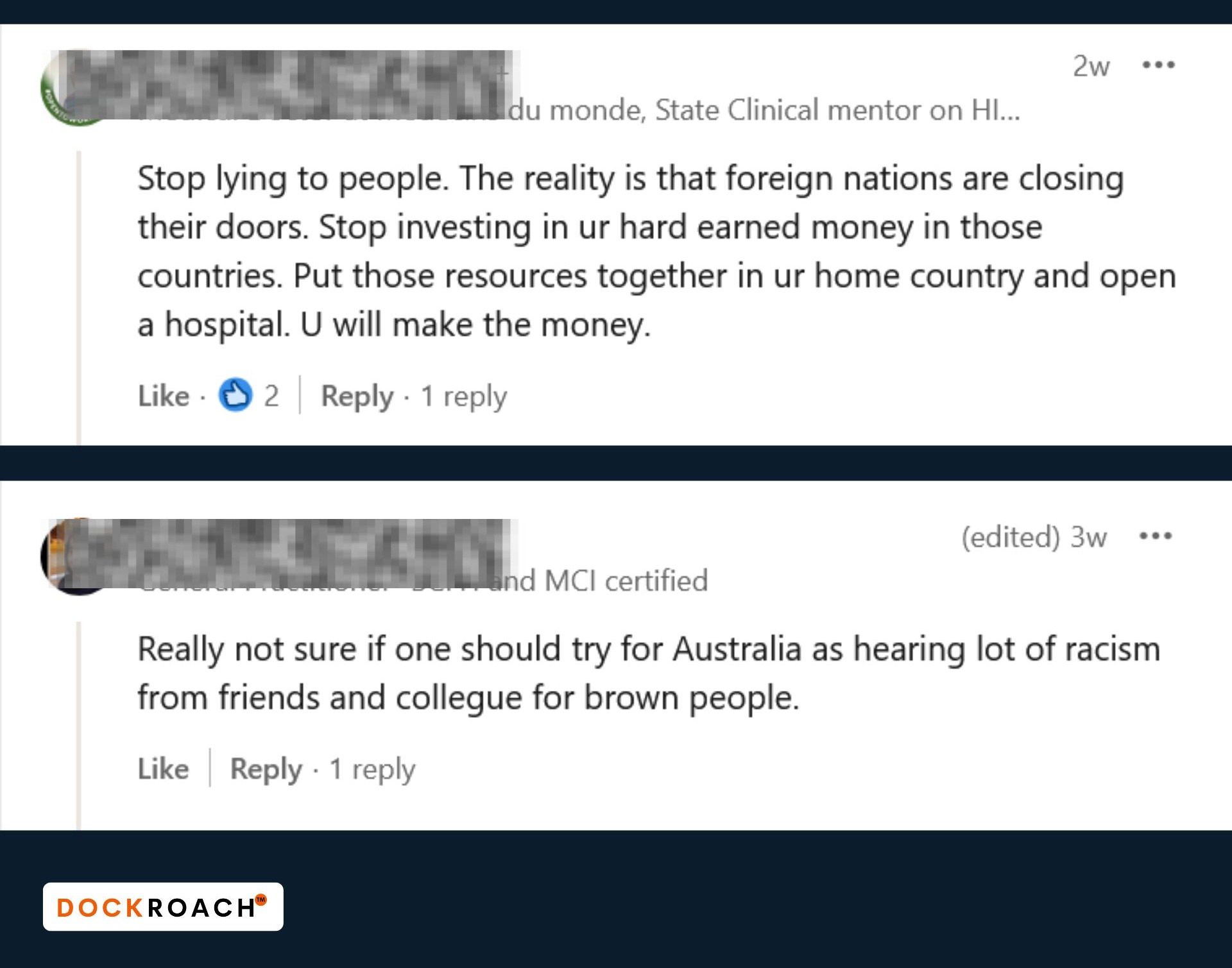
Outside voices can create fear, doubt, and confusion.
Big decisions need absolute clarity.
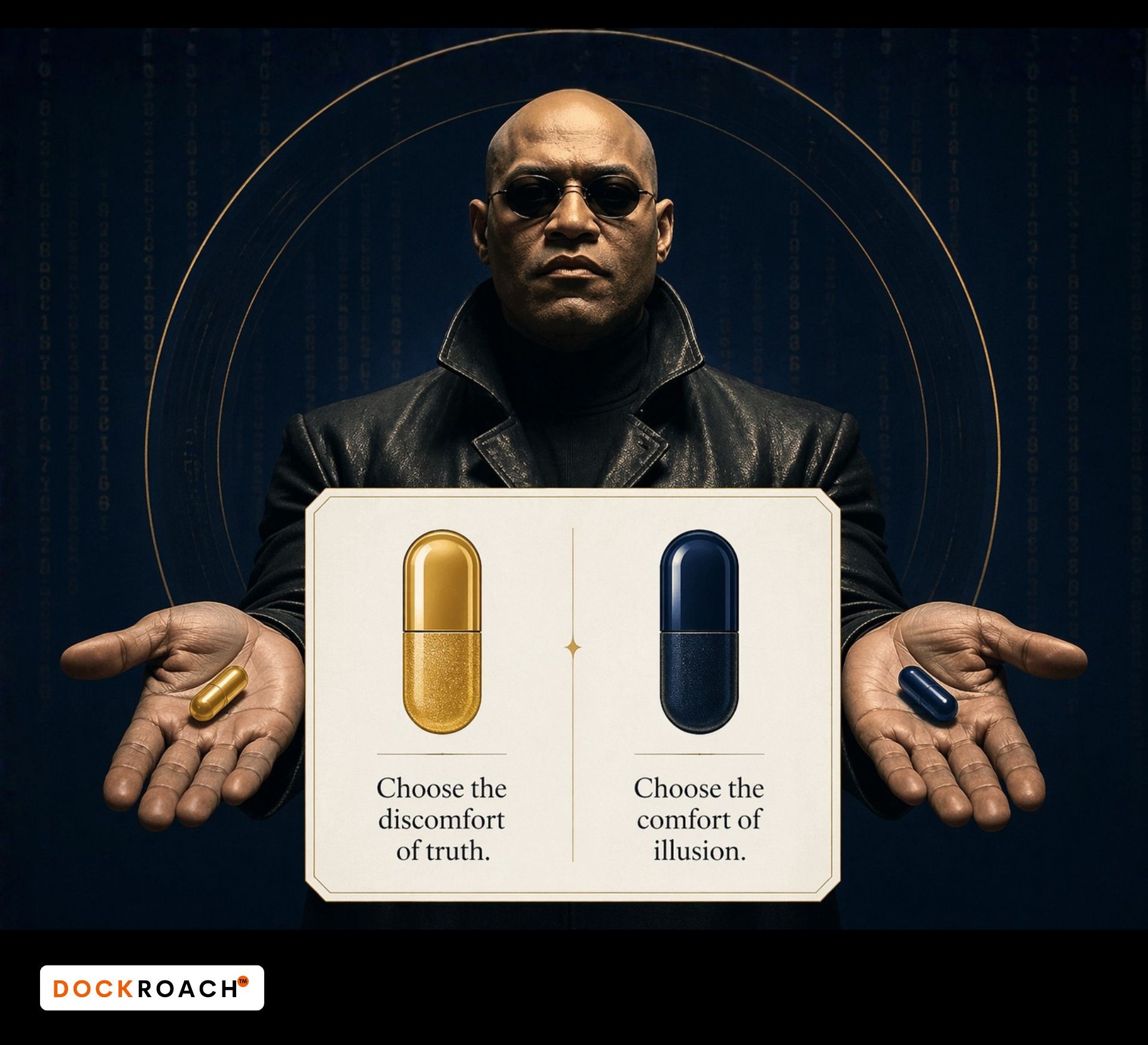
Real clarity begins when you choose truth over illusion.
Why most people stay confused
Most people do not struggle because they lack intelligence. They struggle because they are trying to answer a life-defining question while standing inside fear, noise, comparison, and urgency.
They overestimate the permanence of the move. They underestimate the cost of staying. They confuse what feels safe with what is truly aligned. And they often borrow other people’s certainty instead of doing the harder work of thinking for themselves.
That is why I want to share the three frameworks that helped me decide.
The 3 frameworks that helped me decide:
-
Run the regret test
-
Rank your values honestly
-
Use the one-way door vs two-way door distinction
1. Run the regret test
This was the first framework that truly cut through the fog.
I remember feeling, very deeply, that something in my life was no longer aligned. The issue was not only salary, although that mattered. It was the wider gap between what I was giving and what the system could return. My effort was real. My responsibility was real. But the future it offered me felt too small for the life I wanted to build.
So I asked myself a harder question than, “Should I go?”
I asked, “When I am 80 years old, what will weigh on me more, staying where I was, or taking the risk to pursue a bigger life in Australia?”
That question changed everything.
It moved me away from fear and toward honesty. I realised I could live with the discomfort of trying. What I would have struggled to live with was the quiet burden of never finding out what might have been possible.
And now, years later, I can say that clearly. Today I work happily, mostly from home in telehealth, usually between 10 and 5. I also get to support international medical graduates through a journey I understand personally. My income moved from MYR 5,000 per month to around AUD 40,000 per month. More importantly, my life now feels aligned with what I was hoping for.
Absolutely no regrets.
Note: The Regret Minimisation Framework, a concept from Jeffrey Preston Bezos, requires you to project yourself to age eighty and look back.
2. Rank your values honestly
I had to stop dressing my values up to sound more noble than they were. I had to tell myself the truth.
Financial freedom mattered to me.
Leadership mattered to me.
Meaningful work mattered to me.
Freedom of time mattered to me.
Once I admitted that honestly, the decision became much cleaner.
I was not just deciding whether to migrate. I was deciding what kind of life I wanted to build, what kind of work I wanted to do, and who I wanted to become. I wanted more room to grow, more leverage in my effort, and a better way to provide for my family. I wanted to keep developing as a clinician while building a life that could hold both contribution and freedom.
That same clarity later shaped the way I built my work in Australia. It is one thing to move countries. It is another to move toward a life that genuinely fits your values.
If your values are unclear, your decision will feel confusing. Once they are named honestly, the right direction often becomes much easier to see.
Note: Ranking your values is about ensuring your work matches your internal drivers.
3. Use the one-way door vs two-way door distinction
The third framework reduced fear.
Big decisions often feel final when they are not. And when a decision feels final, people freeze. They imagine one wrong move will ruin everything.
That is why it helps to identify the type of door you are walking through. A one-way door is an irreversible decision, something that permanently changes the course of your life, like having a child. A two-way door is different. It allows for calculated risk because there is still a path back. Migration, when structured wisely, can often be approached as a two-way door rather than a one-way one.
For me, moving toward Australia was not a one-way door. I structured it as a reversible step. While working in KKM, I took six months of unpaid leave. That gave me time to pursue the Australian pathway seriously without turning the whole decision into a reckless all-or-nothing leap.
If it worked, the upside was substantial.
If it failed, I still had a path back.
That changed my mindset completely.
I did not need perfect certainty. I only needed the next intelligent step, designed in a way that respected both ambition and reality.
Sometimes that is what courage looks like.
Not burning every bridge behind you.
But moving forward wisely enough that fear no longer controls the decision.
Personal note
Looking back, I did not move because I thought Australia was perfect.
I moved because, for me, it was the path with the lesser regret. It offered a bigger field for growth, better economic upside, a different lifestyle, and a clearer future for the kind of life I wanted to build. That does not mean the journey was easy. It was not. But difficulty and wrongness are not the same thing.
There is a rare kind of peace that comes when you stop asking what is safest, and start asking what is most worthy of the life you have been given. What is my true aim? Who do I want to become? What choice aligns with that future? And what contribution will allow me to look back on my life with quiet pride?
“I knew that if I failed I wouldn't regret that, but I knew the one thing I might regret is not trying.”
That line stayed with me for a long time. Not because it sounds inspiring, but because it forces a clean confrontation with the future.
For some people, the regret will be in leaving.
For others, the regret will be in staying.
The real work is being honest enough to know which one is yours.
Quick recap:
- Do not ask only what feels safe. Ask what you will regret less.
- Name your values honestly, not politely.
- Separate permanent decisions from reversible ones.
- Ignore borrowed certainty from people who are not living your life.
- Big decisions deserve clarity, not noise.
One day, you will have to live with the story of this decision. Choose the version you will be proud to remember.
That’s all for today. See you in a fortnight.