Read time: 6 minutes
Every IMG knows about “recalls.” Piles of them get passed around in WhatsApp, Telegram or Facebook groups, barely half-complete, often confusing, sometimes misleading. The Australian Medical Council has even warned against relying on them. Still, many spend hours trying to fill in the gaps, hoping they’ll somehow make sense by exam day.
But here’s the truth: traditional recalls don’t prepare you for an 8-minute station. They prepare you for frustration.
That’s why IMGs are switching to the Optimal Recall Question Bank — designed not just to review, but to train like the real exam from home. Each question is complete, structured, and built with clear learning points to accelerate your clinical exam preparation.
Why This Matters to You?
The AMC Clinical Exam doesn’t reward how many questions you’ve read. It rewards how well you perform under time pressure.
Practicing with incomplete recalls is like training for a marathon by jogging a random distance every other week. You’re moving, but not building the right stamina.
Why Most Fail with Traditional Recalls?
-
The stems are incomplete/ misleading — key details are missing.
-
Tasks are vague — leaving you guessing instead of practicing.
-
Hours are lost clarifying information instead of rehearsing role plays.
-
There’s no structure for timing, feedback, or examiner expectations.
And the result? Candidates walk into the exam unprepared for the real 2+8 minute rhythm.
Stop Guessing with Recalls.
Start Performing.
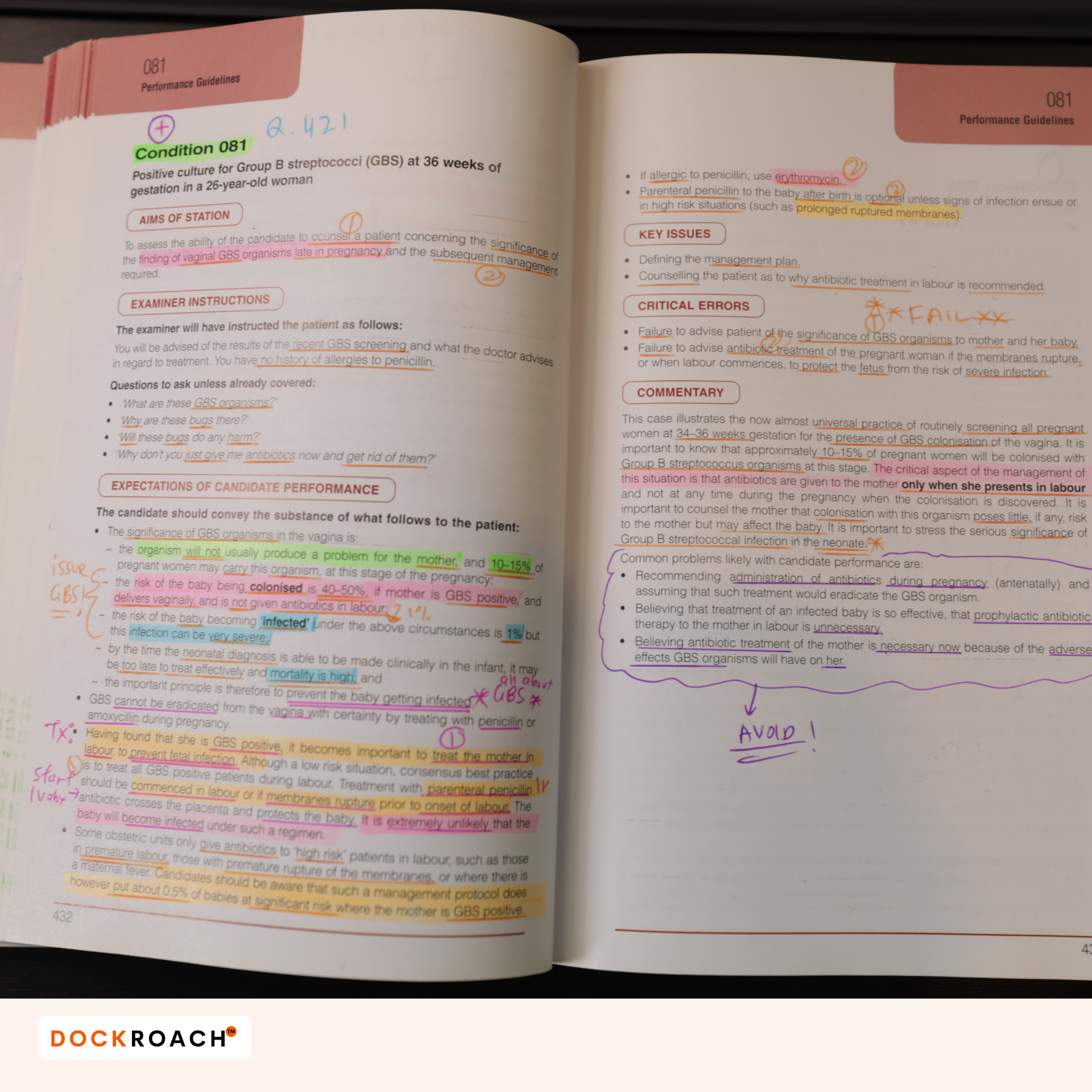
Image note:
Screenshot from the AMC Clinical Handbook — Answer page for a clinical scenario. Notice the absence of patient-centred communication and time-based structure in the response.
When I was preparing for the AMC Clinical Exam, the only reliable resource I had was the clinical handbook — heavy on theory, but without sample answers I could use in a real 8 minute role plays.
Like many others, I turned to traditional recalls. Their value was obvious: they reflected common exam scenarios. But they also left me constantly guessing — piecing together incomplete cases, debating core topics, and wasting precious hours clarifying what should have been clear from the start.
That cost me a lot of time. And time is the one thing you can’t afford to lose when navigating the standard pathway.
That’s why I built what I always wished existed: the AMC Clinical Accelerator. It doesn’t just give you scenarios — it gives you complete stems, structured answers, examiner checklists, and patient-friendly scripts.
Most importantly, it helps you measure what matters: how many role plays you complete, how well you perform, and how much closer you are to finishing a full exam flow on time.
No more guessing. No more wasted hours. Just structured practice that turns effort into progress — and progress into a pass.
The 5 Reasons IMGs Are Switching Optimal Recall Question Bank
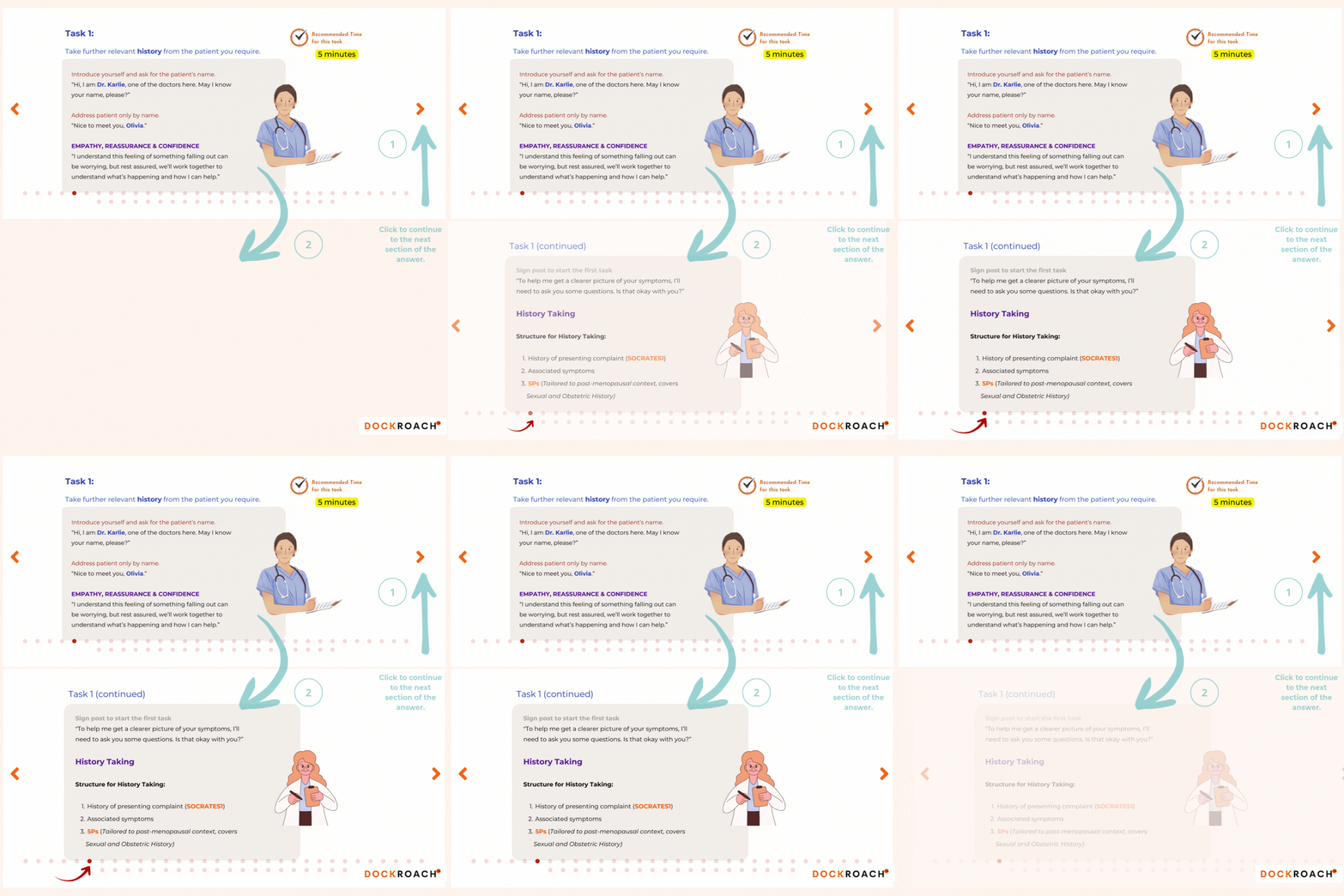
Image note:
Task answers from the Optimal Recall Question Bank (Q.95) — the exact opposite of the AMC Clinical Handbook design. Notice the time-based structure and patient-centred dialogue woven throughout the 8-minute station.
- Full Stem, Zero Guesswork
Traditional recalls are often incomplete and ambiguous. Optimal Recalls give you the full stem, exactly as you’d face it in the exam. No missing data, no wasted hours clarifying gaps. You train from the very start on how to quickly decode a full-length stem — a core exam skill.
2. Tasks That Match AMC Standards
Optimal Recalls are engineered at the PGY1 level, mirroring how the AMC builds its cases from real Australian patients. Every scenario is exam-relevant, performance-focused, and written in formats familiar to you the moment you step into the station.
3. Complete Task Answers with Clear Outcomes
Each case includes structured answers, examiner expectations, and a minute-by-minute guide for the 8-minute station. You’ll see how a top scorer approaches it, and then practice until you can do the same with confidence.
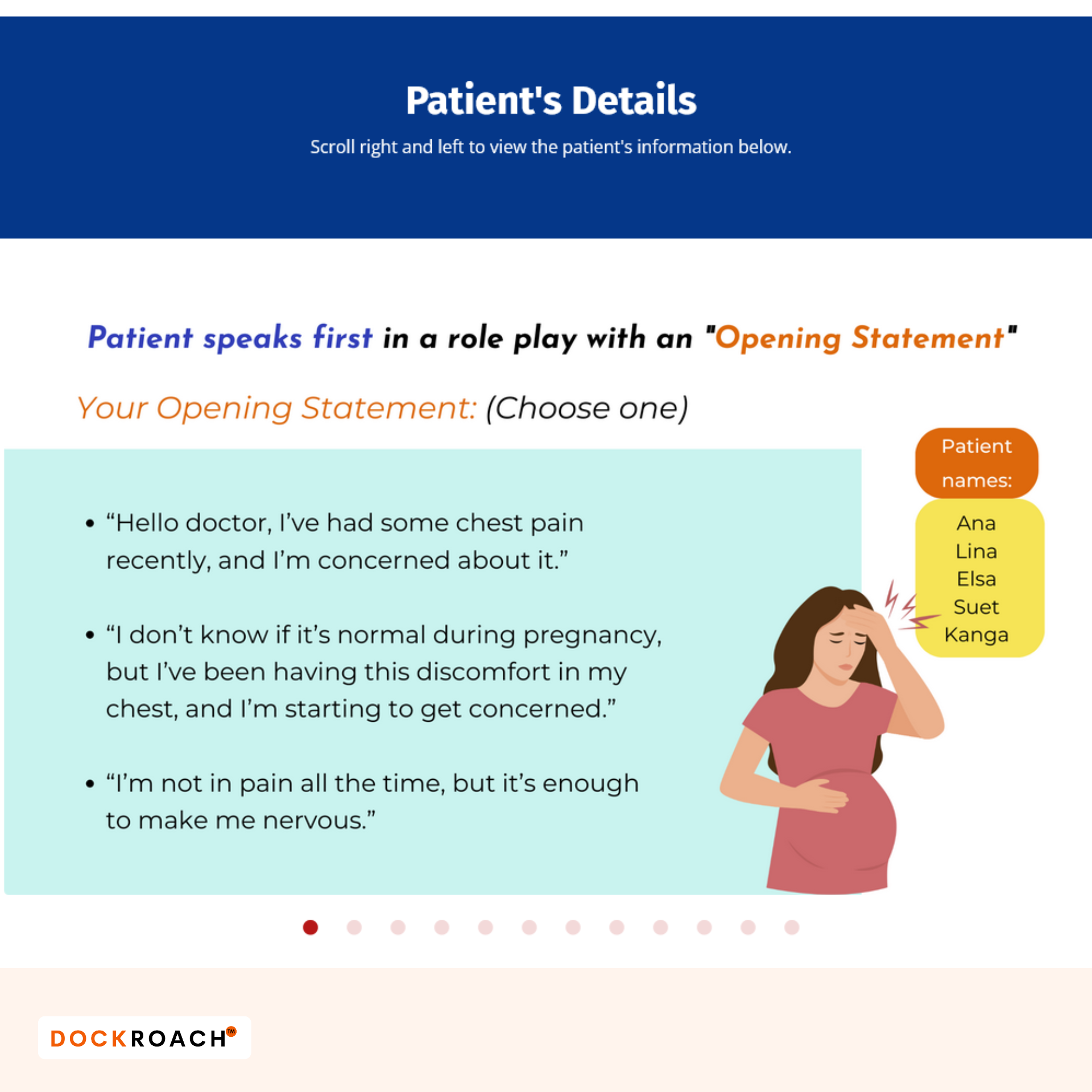
4. Patient-Friendly Storytelling (See image below)
Cases are written in plain English, not jargon. That means you can role play with anyone — family, friends, or peers. With self-feedback checklists and task answers, even non-medical partners can help you identify what to improve. No more waiting for the “perfect study partner.”
5. Speed & Volume in Practice
Optimal Recalls are designed for scale. Paired with the DockRoach Optimal Role Playing System, you can push to 25 role plays per day (5 sets of 5). Because what you measure is what improves — and here, you’ll be tracking role play completions, not wasted hours reading notes.
As one IMG shared with us:
“Once I started using the Optimal Recall Questions, there was no going back to traditional recalls.”
Personal Note — Why I Do This
There’s a story I keep close: the boy and the starfish. After a storm, thousands of starfish lay stranded along the shore. The boy knew he couldn’t save them all — but by throwing them back into the ocean, one at a time, he made a difference to each one.
That’s how I see my work. I know I can’t change the entire AMC Standard Pathway system overnight. But I can make sure that the IMGs who come into the DockRoach ecosystem don’t waste years stacking random recalls or drowning in poor-quality preparation.
With the Clinical Accelerator, I can give you a clear, structured way forward — so you don’t just prepare harder, but smarter.
And here’s another quote that guides my success:
“Give me six hours to chop down a tree and I will spend the first four sharpening the axe.” — Abraham Lincoln
What does this mean?
-
The six hours are your preparation time before the AMC Clinical Exam.
-
The tree is the exam itself — tough, demanding, and unyielding unless you’re prepared.
-
The axe is your study method. If it’s blunt — incomplete recalls, scattered notes, unfocused theory — you’ll waste energy and still fail to cut through.
-
Sharpening the axe means using the right resources — structured scenarios, full stems, patient-friendly scripts, examiner checklists. This is what the Optimal Recall Question Bank is designed for.
Because when your tools are sharp, every role play counts. You cut cleaner, faster, and with confidence. And that’s what gets you across the line.
Quick Recap
-
Traditional recalls waste time; Optimal Recalls train performance.
-
Full stems mean no guesswork.
-
Tasks mirror AMC’s real PGY1-level cases.
-
Each scenario includes examiner checklists + patient scripts.
-
Designed for volume: scale to 25 role plays per day.
The Optimal Recall Question Bank isn’t just more questions — it’s a complete training system designed for IMGs who want to perform in the AMC Clinical Exam, right from home.
Make the switch today — and start practicing the way top scorers do.
That’s all for today. See you in a forthnight.